

Graphic
Design
At Murdoch…
Our Graphic Design programme immerses students in a fast-paced world of visual innovation. Through human-centred design, students are taught about the value of design from the very beginning. Including everything from branding to UI/UX design, students develop versatile skills and gain experience in both digital and print mediums. Many students go on to work with real clients and prestigious internships, students are prepared to become strategic designers with the creativity and adaptability to thrive in a high-paced industry.
With a further option to continue their expertise, a fourth-year option of the Graduate Diploma in Design Thinking and Service Innovation, this programme equips graduates with highly sought-after skills in a visual first world.
Graphic design is more than decoration — it’s the visual translation of thought and emotion. It’s where creativity meets purpose, where every line, colour, and shape carries meaning. A good design doesn’t just look beautiful; it communicates, connects, and makes people feel something real. It turns ideas into experiences that can be seen, understood, and remembered.
Our “Students”
Their “Stories“
Want to see what it’s like to study here?
Watch the video to hear from our students
and discover their stories.
Jeremiah Caingcoy
Our Student’s Work
GRD110
Design Foundation
This unit introduces students to the skills and theoretical knowledge of design through a range of practical projects. In response to these projects and through research, students develop an understanding of colour, composition, typography, grids and composition through the practical application of hand and computer skills.
Old Central Fire Station: Reignited
Student Name: Bailey Robertson
This project reimagines the DFES Education and Heritage Centre, located in the Perth Old Central Fire Station, as a space that blends education, heritage, and immersive storytelling. The current layout and touchpoints aim to educate users about fire safety while preserving the cultural legacy of firefighting in Western Australia.
However, several design limitations, such as unclear spatial organisation and outdated or broken signage, hinder the narrative flow and user engagement. Our goal is to enhance the storytelling potential of the space by refining selected touchpoints for greater clarity, emotional connection, and practical impact.


Goals
The goal of this project is to design and deliver
two touchpoint designs that:
- Improve narrative clarity and symbolic communication across touchpoints.
- Make learning more engaging, interactive, and enjoyable.
- Encourage children to start learning about safety from a young age.
- Improve internal and external touchpoints by addressing key user pain points.
- Create a more inviting and exciting atmosphere, particularly in underutilised or less welcoming zones (e.g., downstairs)
Principles
- Aesthetic Appeal – Use colour, vibrance, and visual hierarchy to attract attention and communicate clearly
- Education First – Provide clear and useful insights into emergency awareness in an easy-to-understand way.
- Interactivity – Encourage hands-on learning that is immersive and fun.
- Family-Friendliness – Ensure all ages (children and adults) can engage with clear signage and accessible language


London Court Books
Student Name: Rhys Hemery
The aim of this project is to redesign the narrative and branding of London Court Books to better suit the needs of its users. We have broken our redesign into four key goals:
- Link the narrative of London Court Books with the
narrative of London Court as a whole - Improve the interior design to better
accommodate users’ needs - † Create a unified narrative for the store, which
currently combines several clashing narratives - Appeal more strongly to the store’s primary
audiences
The two touchpoints I have chosen as part of the redesign process are a sign that will appear at the stores entrance (for the internal touchpoint), and a bookmark that doubles as a business card (for the external touchpoint). I will design these touchpoints to communicate the redesigned narrative of the store, and to be part of a visually consistent brand identity.


GRD118
Introduction to Graphic Design
This unit explores visual communication as it relates to the processes, techniques, and creative possibilities of digital and graphic design production. Throughout the unit students develop a thorough and culturally informed understanding of critical graphic design and new media history and theory. Students will also develop practical design skills through the rigorous development of numerous graphic design projects.
Alesio Ditullio

Amilie Mackenzie

Kayla Gibson

Evan Hart

GRD201
Publication Design
This unit focuses on a wide range of desktop publishing techniques in the design and production of print publications. Concepts of pre-press, creating artwork for print, typography, layout and print production techniques are introduced at a theoretical level and implemented in practical project based work.
Current Graphic Design methods involve traditionally learnt practices such as colour theory, grid systems, semiotics, etc. to produce electronic software-based outputs ready for print. At press, these designs will encounter additional practical elements such as ink, paper, and speciality print finishes. Students address practical connecting electronically delivered outputs with practical industry-based print practices to produce professional standard print publications.

Elara Radford, Makayla Guelfi and Narelle Fouche

Mariela Mate, Madi Groeschoe, Jeremiah Caingcoy

Liv, Courtney and Jasmine

Joshua Pendleton, Stephanie King and Dominique Benson

Rhys Hemery, Gaurang Khurana and Jenel Dumangcas

Grace Loring, Vanetska Gonzalez, Olivia Aboo and
Dinya Samaraweera
GRD202
Brand and Identity Design
This unit provides students with the theory and practice of brand and identity design. This unit looks at the research and development strategies as well as the core components of an identity or brand: logo, colour, typography, language, graphic elements and imagery. Together they form a system that builds an effective identity or brand.
Branding
Students work with industry clients and use ethnographic research techniques to better understand who their designs will reach. These clients are not-for-profit organisations that seek innovative and exploratory design methods that meet human, environmental, and societal needs.
City of Kwinana: PUP Campaign
Courtney Vamvas, Jasmine Wasley and Rhys Hemery
Our goal is to raise awareness about the hidden dangers of dog waste and how it pollutes soil and waterways, spreads bacteria, and affects shared spaces. The more people understand, the more likely they will make responsible choices.
We began by hearing what the community had to say. Through surveys and research, we learned that many people don’t know the environmental impact of uncollected dog waste. This insight became the heart of our campaign. We’re not just sharing facts; we’re shifting understanding.
We blend real dog imagery with playful hand-drawn elements like germs, arrows, and speech bubbles. Our colour palette is bright and inviting, and our typography is clean and clear. These visual choices make the information feel accessible, engaging, and memorable without being overwhelming or too serious.


Themes & Issues
After conducting interviews and surveys, we narrowed down the issues that the public had with dog waste to the impacts it had on the environment & community, as well as the image of all dog owners.
Through this, we decided to theme our campaign around educating the public about the negatives of not picking up dog waste.
In addition to themes and issues, we explored imagery and ways to encourage our audience to engage in our message, or how to change existing dog owning structures such as registration.
Our interviews concluded however that many believe that they weren’t enough public or visible anti-dog waste that were insistent or permanent
Delivery
Here, we showcase the final versions of our three collateral pieces: magnets, wayfinding stickers, and a poster. Each is presented as a stand-alone design and in a real-world context – how they would appear in a home, on a path, or in a public space. This section highlights the practical impact of our work and how each design helps educate, engage, and inspire responsible behaviour in the community.
Each team member brings something to the table: Courtney’s dog photography, Rhys’ illustrations, and Jasmine’s graphic motifs. Together, we’re building a consistent visual language using PNG elements that will flow across all our touchpoints: magnets, wayfinding path stickers, and large-format posters.


Packaging
This project explores the construction of identity and how this identity is then communicated through visual design strategies. Students are introduced to contemporary branding, logo design, and identity systems and how they are applied to a range of print, digital and service contexts of touchpoints; in this case, students focused on packaging.
Mariela Mate

Rhys Hemery

Narella Fouche

Courtney Vamvas

Dinya Samaraweera

Jasmine Wasley

GRD204
Design Thinking for Innovation
In this unit, students will explore the principles and practices of design thinking through a simulated project environment. Working in cross-disciplinary teams, they will investigate complex challenges using co-design approaches and adopt collaborative roles to manage project dynamics effectively. The unit introduces key frameworks, tools, and research methods associated with design thinking, enabling students to critically engage with real-world scenarios. Through reflection and analysis, students will consider how design thinking can be applied across diverse disciplines and contexts, fostering a deeper understanding of its potential impact in multifaceted professional settings.
Liveable City
Improving Safety in the Fremantle City Centre
Student Name: Isabella, Emily, Luke and Zoe
What is a Liveable City?
“A liveable city that is vibrant, socially connected and desirable”
(City of Fremantle, 2024, pp. 12)
Problem statement
How might we improve the feeling of safety for young women in less lively areas at night?
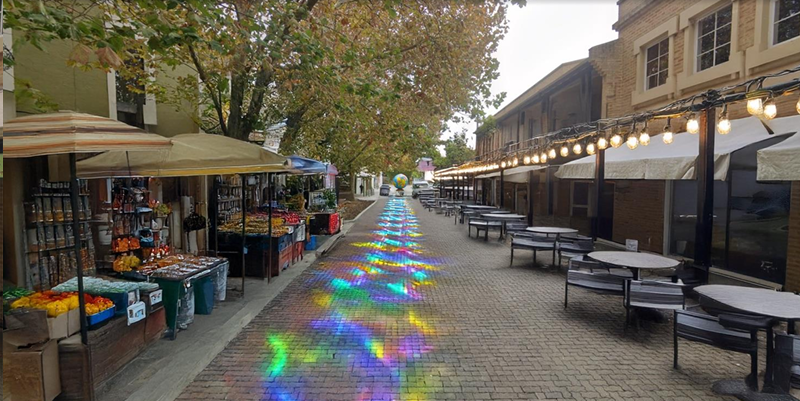
Conceptualising ideas (Night Markets)
- Increased Foot traffic
- Natural Surveillance
- Stronger Community Presence
- Increased Perception of Safety
- Job Opportunity’s (Abandoned Buildings)
Conceptualising Ideas (Light Show)
- Creative way to light up an area
- Increased Visibility
- Increased Foot Traffic
- Crime Prevention Through Environmental
- Design (CPTED)
- Psychological Effects

Resilient City
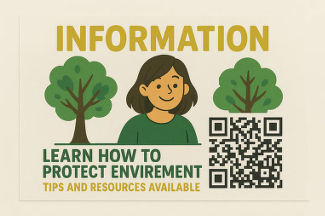
Engaging Youth in Fremantle Sustainability
Student Name: Maya, Mikayla, Naomi, Amber and Jayson
- Young people feel as though they have a lack of a voice or power to ignite change when it comes to sustainability and environmental consciousness
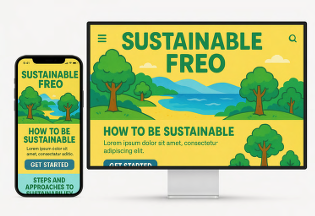
- There are a lack of digital platforms that are both educative and engaging
- There is a lack of positive awareness and education that is engaging and fun
Our Focus
Need to find a way to make sustainability education feel less like a chore and more engaging to help young people feel empowered and inspired
What is the problem?
Lack of education and understanding among 18–25 year-olds about how to contribute to sustainability
Why Does This Problem Occur?
- No strong youth voice
- Youth feel disempowered
- No clear environmental platforms
- Poor messaging and engagement
- Lack of knowledge/action pathway
Why Is This Problem Important?
Youth are the future Current decisions shape environmental outcomes. Need for community-based action, not just individual responsibility
GRD263
Website Design
This unit provides students with a solid basis in the theory and practice of user experience (UX) and website design, and in part web development. It focuses on a holistic approach to the design and production of websites. As a result, the whole UX and web design production pipeline is examined, including, interpreting a brief, applying UX research methods, utilising AI tools, information architecture, wireframes, design concepts, front-end coding, and responsive design until we end up with a beautiful and fully functional website.
These projects focus on giving students a solid basis in theory and practice of website design and development. The work focuses on a holistic approach to the design and production of web sites. As a result, the whole Web Design pipeline is examined in detail, from the client questionnaire to interpreting the brief to personas, wireframes, design comps, front-end-coding, SEO, web standards and responsive design until we end up with beautiful and fully functional websites.
Bailey Robertson

Naraelle Fouche

Raie Rivaland

Serena Roberto

GRD338
Advanced Web Design Project
This unit explores advanced aspects of the UX design and development of WordPress websites. Students will utilise advanced UX research and analysis, industry-standard web design and development techniques, animation, AI, project development workflow processes and project management skills, toward the successful completion of a simulated or client.
These projects explore advanced aspects of design and development of websites for real-world clients, such as responsive design, content management systems and project management aspects. Students work as a part of a multi-disciplinary group to codesign solutions and then use industry-standard production and project management methods towards the successful completion of a web project for a client
MESH
creative minds at work
Team members: Alex Bell, Millie Delph, Louis Matthys and Thomas Marsden
MESH is Murdoch University’s creative student consultancy. Prior to this project, MESH’s website required a redesign to align it with Murdoch University, and to better achieve its goals of creating real-world learning opportunities for students. The projects main objective were to develop a platform to display student work on, create a balance of professionalism and dynamic creativity, and to increase the credibility of student work. These objectives helped us to achieve the overarching goals of developing work-integrated learning opportunities for students, simplifying the purpose of the MESH website, and aligning the site with the new branding and reputation strategy of Murdoch University’s School of Media and Communications.


Athena Swan
Team members: Declan Bagnara, Riley Davies, Seth Haw and Yeolmea Park
Murdoch University staff and students are committed to creating a supportive and safe space for everyone at Murdoch, but need to be able access information easily and reliably. They need to be empowered and informed within a diverse and equal environment, and be able to impact that knowledge onto others.
By incorporating User Experience (UX) Design, we will systematically develop a website for Athena Swan – Murdoch that upholds the goals of Athena Swan and Murdoch University while also meeting user requirements.


Bhutan Youth Development Fund
Team members: Sophia Charteris, Nicole Cheng, Ben Godfrey, Chantal Kozlowski and Teya Znaor
The Bhutan Youth Development Fund (YDF) website project aimed to modernise the organisation’s outdated site, increase online donations, and boost engagement through social media. The new website needed to clearly communicate YDF’s mission, offer accessible scholarship information, and build trust with potential donors through transparent storytelling
Project Goals
- Modernise the design and functionalit
- Increase donor engagement and online donation
- Improve social media integration and visibility


The Academy of Communications and Creative Media
Team members: Jemma Cook, Samuel Doyle, Trinity Lloyd and Halle Jocelyn
The Academy of Creative Arts and Communications requires a website in line with its soft launch in 2025, this website will work to establish The Academy as a brand engaging high school students, the community, and industry professionals in creative fields. The site must reflect Murdoch’s unique, multidisciplinary approach to Communications and Creative Arts. It should highlight the achievements of both students and staff, promote workshops and projects, and distinguish Murdoch from competitors like ECU and Curtin University. The website need to be engaging, accessible, and aligned with The Academy’s vision for creative arts education.
Our team is designing a web page for The Academy, a new branch of Murdoch University launching as an opportunity for prospective learners. The web page aims to provide information and engagement opportunities for prospective students and all groups open to learning and engaging. This will be done over the course of 14 weeks using in depth design methods and cooperation with Murdoch academic heads


GRD379
UI and UX
Mobile App Design
This unit explores the theory and practice of UX (user experience) and user interface design in relation to web and mobile app devices. Students will define a problem through research, utilise AI throughout, iterate through design ideas, build a digital prototype, and apply user testing to a mobile app concept.
These projects explore the practice of User Experience Design in relation to Mobile Apps. Students starts the project by defining a problem, iterate through concepts, build a digital prototype and apply user testing feedback to a mobile app concept. A range of User Experience Design methods are explored such as ethnographic research, goal centred design, prototyping, usability testing, information architecture and user interface design.
Alexander Bell
The SMART SELECT app will help eliminate confusion and decrease the need for multiple sign-ups, allowing students to make well-informed choices about their courses and stay aligned with their degree requirements.
If students at Murdoch University have access to an app that offers tailored unit suggestions based on their major, they will find the unit selection process to be much smoother and more efficient.
As results, students will experience lower stress, greater confidence in their academic planning, and higher overall satisfaction with the university’s enrollment system.


Adria Cheung
The TaskBee app helps students stay organised by allowing then to track deadlines, manage tasks, and boost productivity. Core features include task lists, automatic deadline reminders, a clear calender view for easy planning, and a daily schedule to highlight tasks for the day. The main goal is to provide students with a straightforward, effective tool to manage their time more efficiently and reduce procrastination.


Millie Delph
IRIS unites productivity and wellness to help students balance life and mental
health.
Data found that only 18% use time management systems (Acuity Training, 2024), yet effective use increases students’ chances of higher grades by 53% (Adiutor Resources, 2024). Iris aims to solve the unorganised student life, through journal and calendar pages


Adria Cheung
The TaskBee app helps students stay organised by allowing then to track deadlines, manage tasks, and boost productivity. Core features include task lists, automatic deadline reminders, a clear calender view for easy planning, and a daily schedule to highlight tasks for the day. The main goal is to provide students with a straightforward, effective tool to manage their time more efficiently and reduce procrastination.


CRE313
Creative Media Projects 3
This unit brings together each of the different elements developed over the course of study. The analytical and conceptual skills in Creative Media are applied to real world projects. In order to complete a project brief a solid grasp of the issues involved are required. Students will work individually and in groups to a specific brief, which may be discipline-based or cross several disciplines, with the research undertaken laying the groundwork for the subsequent production of a creative piece of work.
These projects are a chance for students to extend their skills, play, experiment and build portfolio ready projects in any area of Graphic Design. Students worked individually or in groups on a range of different briefs, and followed the appropriate workflows and production processes learned throughout the major. Projects were either client based or students worked individually to build portfolio.
Alexander Bell
The project is to create a new innovative golf brand that rivals established names like Titleist, Taylor Made, Callaway, and Ping, while focusing on attracting a younger audience. This brand would address the challenges of golf’s traditional image and high barriers to entry by introducing fresh, modern, and accessibe elements.


Adria Cheung
This project aim is to create a bag that is: sustainable, durable, multi-functional, aesthetically pleasing and comfortable to carry around.
I decided to design a sustainable bag specifically for university students. Personally, I’ve always struggled to find the right one, most bags don’t catch my interest, are too expensive, feel cheap and low quality, or simply don’t fit my laptop. I also liked the challenge of creating a sustainable bag, especially since more people, particularly younger generations like university students, are becoming more conscious of the environment.
So, I decided to address a the problem that uni students need a versatile, long-lasting bag that can handle all their essentials comfortably. As many current bags lack durability, sustainability, or adaptability, which leads to frequent replacements.


Molly Davies
Perth holds thousands of artists across a diverse range of mediums, 200+ of which routinely attend anime conventions to display + sell their artwork.
But, how many of those artists could you actually name?


Riley Davies
Due to the need for Indigenous representation within AGDA and the broader graphic design community, this project aims to develop a visual brand identity along with effective touchpoints for an AGDA associated event or workshop program. This program should encourage Indigenous Austrlians, particularly high schoolers, to pursue a career in graphic design by providing them with an understanding of what graphic design is, what a career might look like, and where it can lead them.


Louis Matthys
Design a visual identity for Beigium’s national branding that is beatiful, bold, flexible, and most importantly; connected to culture. Currently, residents do not have a united national brand they can feel represented by. This project’s objective is to change that, and bring residents a new experience of belonging and representation. The visual identity will include typography, colour, touchpoint applications, strategy and guides that go beyond the present time and will be equally applicable 50 years from now.


Tara Radic
Our mission is to create opportunity to all those who wish to make a change in the Film industry of Western Australia and further.
A local way to showcase works on a regular basis could greatly impact the cultivation of film culture in Perth, and provide opportunity to an already difficult discipline to work in.


CRE314
Creative Media Projects 4
This unit builds on the work undertaken in CRE314 to complete an individual or group-based production This unit requires creative thinking, problem-solving and communication skills which are applied in a project-based learning environment to work toward the production of a creative piece of work.
This project allows students to build portfolios of their work completed throughout their major in graphic design. This unit requires creative thinking, problem-investigation and communication skills which are applied in a project based learning environment to work toward the production of a creative piece of work. It encourages students to question, listen and act ethically and intellectual risk-taking; to make connections within and between disciplines; towards developing an professional industry relevant range of portfolio work to be delivered across print, web and social media spaces.
Alexander Bell

Riley Davis

Millie Delph

Louis Matthys

Dinya Samaraweera

Jiabin Zhang


